Shop TV Boards: What to Put on the Screen (and What to Leave Off)
A TV on the shop wall can save dozens of walks to the office every day, or it can become expensive wallpaper. The difference is what you put on it.
5 min read
Trusses per hour is the number everyone quotes and the one most likely to mislead. Here's how to measure production in a way that's fair and actually useful.
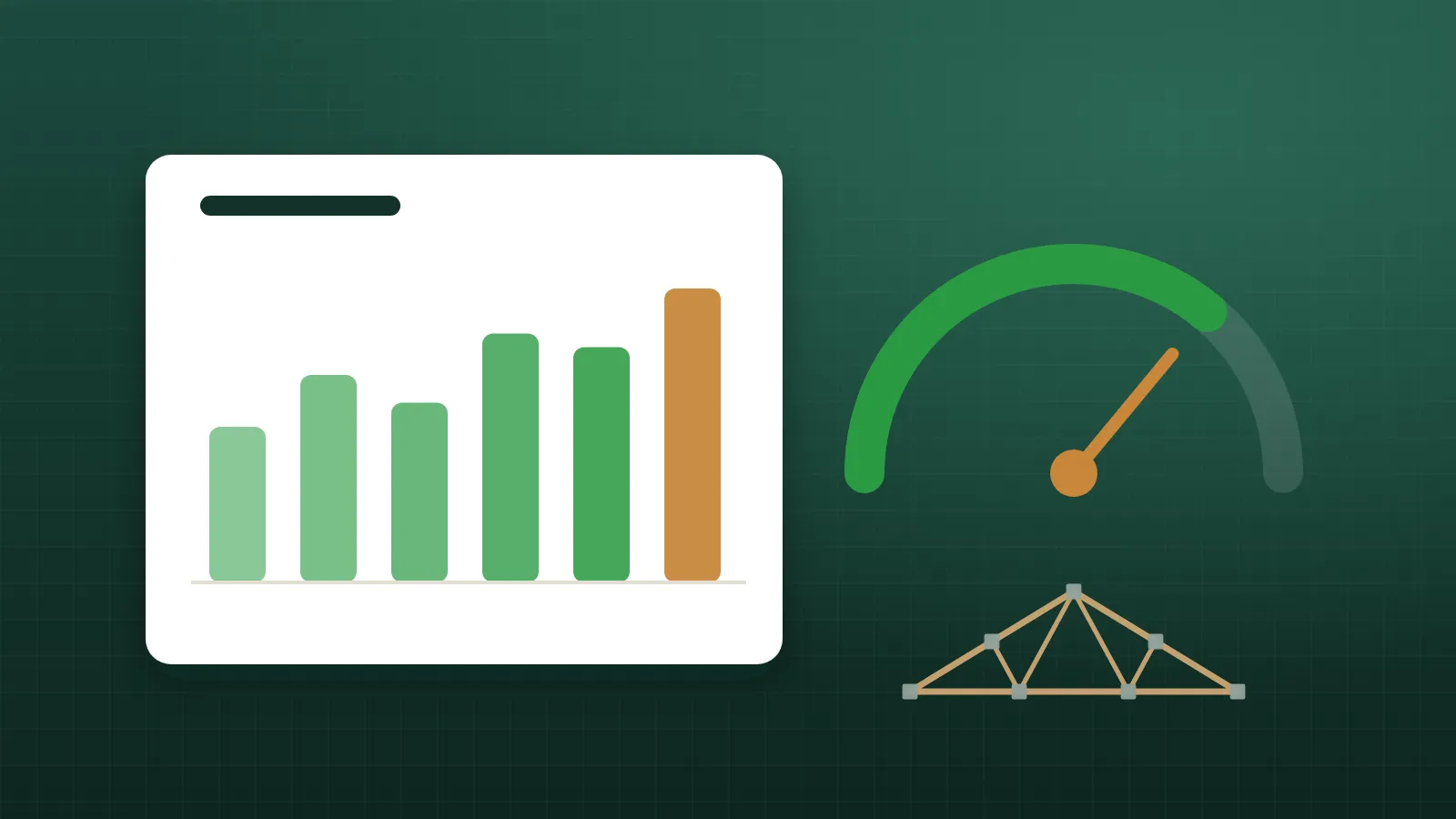
Every plant manager wants to know how productive the floor is. Is this week better than last? Is one crew faster than another? Did the new table setup help? The questions are simple. Answering them fairly is not, because trusses are not all the same. This article covers which numbers to track, how to calculate them, and the traps that make production data misleading.
To measure productivity you need a unit of output. In truss manufacturing, there are four common choices, and each tells you something different:
No single unit is perfect. Many plants track two or three side by side: trusses for the customer view, and board feet or joints for a fairer view of effort.
Output only means something relative to the time it took. The most common measure is output per labor hour (sometimes called man-hours). For example:
Board feet per labor hour = board feet built ÷ (crew members × hours worked)
The same formula works with trusses, joints or plates in place of board feet.
Two details matter a lot here:
The biggest mistake in production measurement is comparing numbers that aren't comparable. Common traps:
The most useful view of production data is usually a trend over time for the same crew, the same equipment or the same type of work. Ask:
Investigating the outliers is where the real gains usually are. A batch that took twice as long as normal often points to a fixable cause: a design detail that's hard to build, a recurring material shortage or a setup that could be simplified.
Production efficiency isn't only about how fast crews build. Some of the most valuable measurements are about flow:
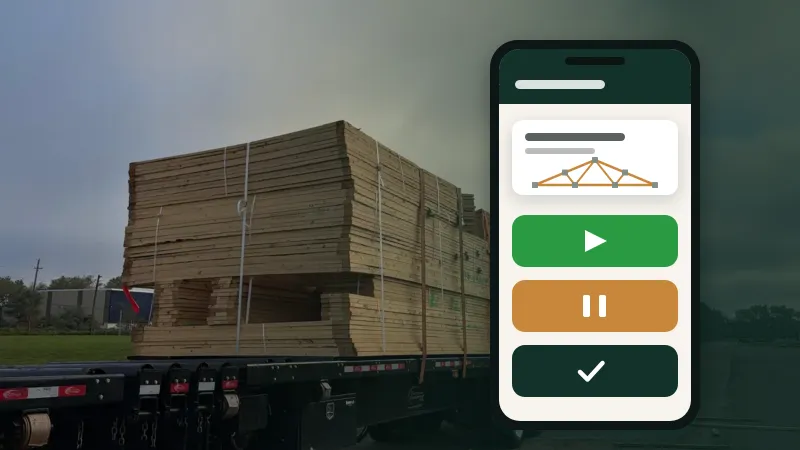
Production data is only as good as the way it's collected. Paper tally sheets filled in at the end of a shift are often estimates. Data collected at the moment work happens, with a tap on Start, Pause and Done, is far more accurate, and it costs crews almost nothing. Combined with counts per batch from the build sheets (trusses, lumber, plates and joints), you get output per crew, per hour and per day automatically.
Production numbers can motivate people or demoralize them. A few principles help:
If you tie production to a bonus program, these principles matter even more. See Designing a fair crew bonus program for more.
If you're starting from nothing, track these weekly:
That's enough to see trends, spot problems and have useful conversations, without drowning anyone in data.
Trusses per hour is a fine headline, but on its own it's misleading. Track a size-aware unit like board feet or joints alongside it, use active time and real crew sizes, compare like with like, and watch trends rather than single days. Above all, collect the data at the moment the work happens so it's accurate.
Truss Plant Portal's build tracking counts trusses, lumber, plates and joints for every batch and records Start, Pause and Done from the crew link, so output per crew, per hour and per day is there without extra paperwork.
A TV on the shop wall can save dozens of walks to the office every day, or it can become expensive wallpaper. The difference is what you put on it.
5 min read
A whole house is too big to track as one unit and a single truss is too small. Batches by build group are the size that makes the floor run smoothly.
5 min read
Software that works fine at a desk often fails on the shop floor. Here's what makes a tool usable for people with gloves, noise and no time to spare.
4 min read