Shop TV Boards: What to Put on the Screen (and What to Leave Off)
A TV on the shop wall can save dozens of walks to the office every day, or it can become expensive wallpaper. The difference is what you put on it.
5 min read
A whole house is too big to track as one unit and a single truss is too small. Batches by build group are the size that makes the floor run smoothly.
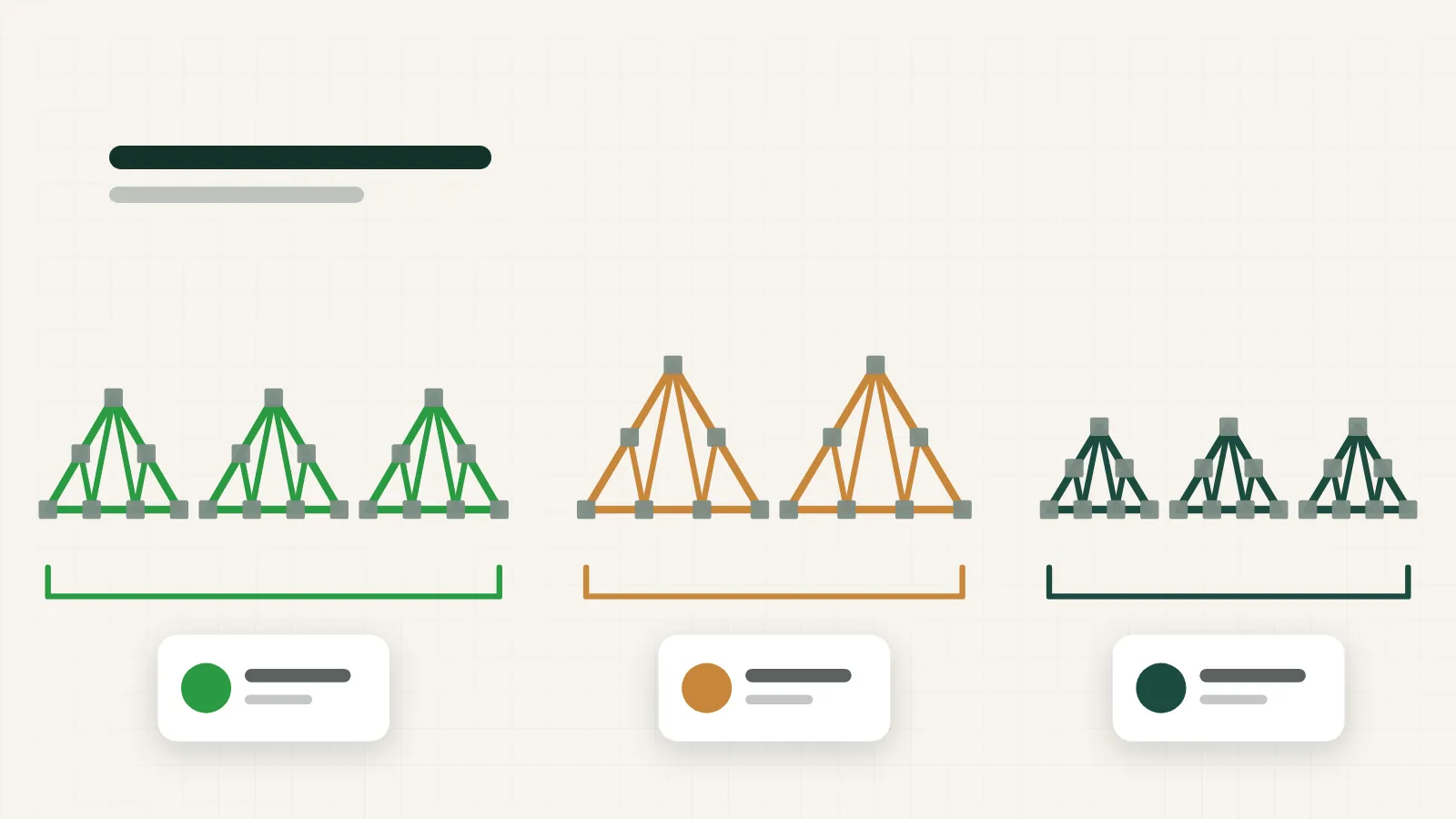
A single house can need dozens of trusses in many different shapes: common trusses, girders, gable ends, hip sets, valleys and so on. Tracking a job as one big unit tells you very little about progress ("building") until it's suddenly done. Tracking every truss individually is precise but overwhelming for crews. The practical middle ground is the batch: a group of trusses built together.
This article covers how to split a house into sensible batches, what to count for each, and how batching helps scheduling, tracking and fairness on the floor.
A batch is a set of trusses that one crew can build as a unit, with the same setup or very similar ones. Good batches usually share:
Truss design software usually groups trusses by mark or label already, with a quantity for each. Those groups are a natural starting point for batches. Identical trusses with the same mark belong together; a group of very similar trusses may also make sense as one batch.
Once a house is split into batches, the most useful thing you can do is count the work in each one. Four numbers tell most of the story:
| Count | Why it matters |
|---|---|
| Trusses | The simplest measure of output, and what the customer ultimately receives |
| Lumber pieces or board feet | A measure of material handled and cut |
| Plates | Each plate is pressed, so plate count tracks pressing work |
| Joints | Each joint is assembled and plated, so joints reflect assembly effort well |
Why not just count trusses? Because trusses vary enormously. A small valley truss and a large girder truss are both "one truss", but they're very different amounts of work. Counting lumber, plates and joints as well gives a much fairer picture of how much work a batch contains. That matters when you measure crew output or set goals, as we discuss in Measuring truss production efficiency.
Batches don't only organize building; they can organize loading. Think about what the framer on site needs first, and therefore which trusses need to come off the trailer first. Building in an order that matches the load plan reduces re-handling in the yard.
At the same time, consider the table. Batches that use the same setup back to back save changeover time. Where the load order and the setup order conflict, the yard's staging space usually decides which one wins.
A batch has a clear life: it's waiting, then it's being built, sometimes it's paused, and then it's done. The tracking should be just as simple. For a crew, three buttons are enough:
Those three taps produce a surprisingly rich record: when each batch started and finished, how long it actually took excluding pauses, and which crew built it. Multiply that across a day and you have output per crew, per hour and per day, without anyone filling in a timesheet.
The key is that the tracking must be easier than not tracking. Big buttons on a phone or tablet near the table, no login to remember and no typing. If it takes more than a couple of seconds, it won't happen consistently on a busy day.
When batches are tracked as they're built, information flows outward without anyone carrying it:
When crews are measured or rewarded on output, the way you batch matters. If one crew always gets the simple batches and another always gets the complex ones, truss counts will make the first crew look better even if both worked equally hard. Counting joints and plates alongside trusses, and rotating complex work, keeps comparisons fair.
Batches turn a house into a set of units the floor can work through and the office can track. Group trusses by mark and setup, count trusses, lumber, plates and joints for each, order batches with both the table and the truck in mind, and give crews a dead-simple way to start, pause and finish them.
In Truss Plant Portal's build tracking, you upload a job's build sheets and the house is split into batches by group automatically, with those four counts for each, and crews use a simple link to start, pause and finish their batches.
A TV on the shop wall can save dozens of walks to the office every day, or it can become expensive wallpaper. The difference is what you put on it.
5 min read
Trusses per hour is the number everyone quotes and the one most likely to mislead. Here's how to measure production in a way that's fair and actually useful.
5 min read
Software that works fine at a desk often fails on the shop floor. Here's what makes a tool usable for people with gloves, noise and no time to spare.
4 min read